
Independence for Age 6-12
Fostering new types of independence and interdependence in the second plane of development
Trainer: Carla Foster (AMI 6-12)

Independence is a Key element for the development of human potential. How to foster it in Montessori Elementary Schools? What’s are specific needs and goals for the second plane of development? How can we prepare an environment which is supportive?
If we reconsider the application of the Montessori approach in light of this aspect, we can completely transform our understanding of the materials and all the elements of the “method” and move from a content-centered vision to one centered on the child, on the development of the individual and the community.
COURSE SPECIFICATIONS
Format: Two parts, ideally one month each one.
Each part is composed by about some twenty minute video lessons on demand, a pdf presentation (from power point) for each lesson including tasks for further reflection, and a live online 90 minute session on zoom comprehensive of Questions and Answers.
Video lessons and PowerPoint presentations will be available in a reserved area of our website (www.educazionepace.it) up to 31 december 2025.
The two online meetings will be held on the Zoom platform, on a saturday of November and of December.
Language: ENGLISH, with simoultaneous interpretation to Italian if needed
DATE
First Part
- Video and In-depth slides: they will be at disposal up to 31 December 2025
- Live Session 1 on zoom: Saturday 8th November 10:30-12:00 C.E.T.
- Live Session 2 on zoom: Saturday 6th December 10:30-12:00 C.E.T.
- Live sessions will be recorded and made available for people who can’t attend the live session
A Certification of Attendancy will be released, by SISUS (Società Italiana di Scienze Umane e Sociali).
COURSE DESCRIPTION
Independence has many forms: physical, functional, social, emotional, intellectual and more. Each of these independences is achieved by developing different skills, acquiring knowledge, and nurturing abilities and attitudes. Biology plays a role, as independence cannot be given from the outside, and there are developmental milestones that prepare the child for the big work of achieving various types and levels of independence. But the environment also plays an important role. The environment can help or hinder children in developing skills, gaining knowledge and improving capacity and attitude.
Often we speak about independence in the first Plane of Development. Is it still important to consider it during the second Plane?
The answer is: YES, and it is crucial. That’s a key aspect which allow us to move from the idea of a method for an academic content and competences education, to one of Aid to Life, supporting the develop of each individual and the community as a whole.
In considering fostering independence in the second plane, it is important to consider how each type of independence is connected to the psychological characteristics of the elementary child. What are the independence goals in relation to each characteristic and why are they important? How do we ensure that our environments do not put obstacles in the way of developing the independences, and also help children explore and live interdependently in a community?
WHO IS THE COURSE FOR?
Montessori Teacher all over the world, Elementary Grade (6-12 years).
The course will be suitable for many different local implementation of Montessori approach. Still, it is recomended some kind of previous training in Montessori.
Who is Carla Foster?
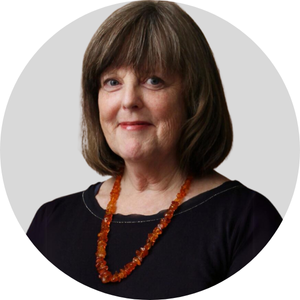
Carla Foster is currently co-directing AMI elementary courses in Prague (MIP), Hartford, Connecticut (MTCNE) and the University of Southeast Norway.
Carla holds a bachelor degree in Social Anthropology and Scandinavian Studies and a combined Masters degree in Old Icelandic Literature and Norwegian Literature from UC Berkeley. She has AMI 3-6 and 6-12 diplomas from MMI in London and the Montessori Institute of Milwaukee. She has worked with children at the levels 3-6, 6-9 and 9-12, working in both private and public Montessori schools. She has been an elementary trainer since 2011 and had the privilege of doing some of that training under Jean Miller at the Navadisha Montessori Institute in Chennai, India, and the rest under Ann Dunne in London, England. Carla is originally from California, but has made Norway her home since 1995. She worked with children in 3-6, 6-9 and 9-12 classes from 1985-2010, both in public and private settings. She has given keynote speeches and workshops on several continents covering many aspects of Cosmic Education and works as a consultant in Europe. She has completed the Bay Area Writers Workshop for teachers of writing and has many years of experience with dance and drama.
TOPICS
1. Cultural ideas about independence/ Different types of independence
2. How independence helps the psychic development during in the second plane child
3. Psychological characteristics of the elementary child, and goals for each type of independence
4. How to offer an environment which fosters independence for the second plan child,in account to each characteristic of the 6-12 child’s mind
5. Independence and interdependence: Help us to do big work-together
MAIN TAKEAWAYS
You will gain a better framework to observe the development of independence in the children, instead of only content-related achievements.
To move from an academic-centred learning to a developmental approach, which is centered on the potential of the individual and the cooperation of the community
You will get practical advice on how to develop an environment for the true independence that is desired for the second plan.
You will gain insight in how to observe and talk to children about the ways in which a learning community can cooperate, and how to make it successful.
WORKSHOP program
ON DEMAND VIDEO LESSONS and POWER POINT
Lesson 1: Different types of independence
Lesson 2: Independence as competency
Lesson 3: Why History? Looking back to see the future
Lesson 4: Developmental aspect of Independence in the Second Plan of development
Lesson 5a-5b: Supporting independence for the mind of the 6-12 child. Part I: Robust adventurer and explorer of the extraordinary
Lesson 6: Supporting independence for the mind of the 6-12 child. Part II: Reason and Imagination
Lesson 7a-7b-7c: Supporting independence for the mind of the 6-12 child: social interdependence and moral development
FIRST LIVE ONLINE ZOOM SESSION – with QUESTION AND ANSWERS
Saturday 8th november, 10:30-12:00 C.E.S.T. (the session will be made available as recording)
SECOND LIVE ONLINE ZOOM SESSION – with QUESTION AND ANSWERS
Saturday 6th December, 10:30-12:00 C.E.T. (the session will be made available as recording)
This course is promoted in collaboration with GAM
